Table of Contents
- One Company or Separate Contractors for Drywall and Painting?
- Drywall Repair Before Painting: Why Sequencing Decides the Finish
- Drywall Repair Cost: What You Actually Pay For
- Drywall Repair Timeline: How Long Each Approach Takes
- Questions to Ask a Home Repair Contractor Before You Sign
- Licensing, Permits, and Insurance: Who Is Accountable
- When Separate Specialists Make More Sense
- Frequently Asked Questions
Last Updated: October 16, 2026
One Company or Separate Contractors for Drywall and Painting?
For most homeowners, hiring one general home repair company for drywall painting is the better call: it removes the handoff that causes most failed finishes and keeps one party accountable.
The catch is that “one company” only works if it actually performs both trades. At HandyFixNow, we handle drywall repair and painting as one continuous job, which is why we wrote this breakdown.
The real question is not which option is cheaper on paper, but which keeps the drywall repair and paint finish from being treated as two unrelated tasks.
Below, we compare one coordinated crew against separate drywall and painting contractors on cost, timeline, sequencing, and defect accountability.
Drywall Repair Before Painting: Why Sequencing Decides the Finish
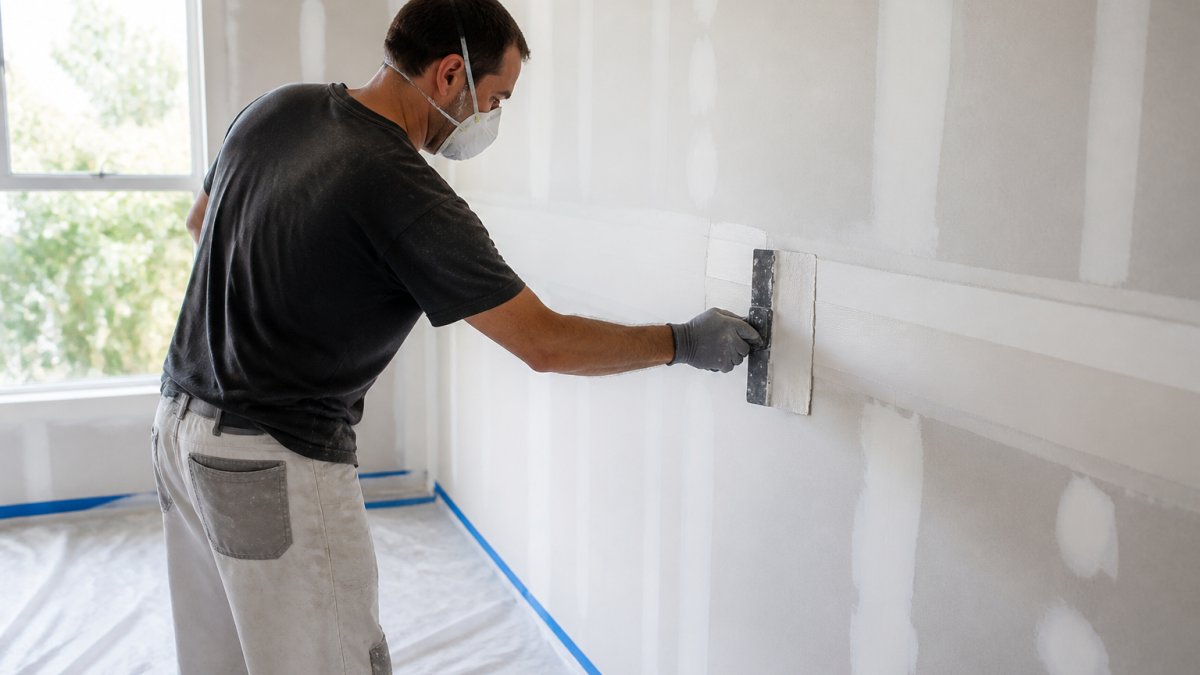
Drywall painting after repair determines whether the finished wall looks seamless or shows every patch under raking light. Patching, taping, and skim coating introduce moisture and texture that must cure and be sanded before primer goes on.
Skip that order and the paint locks in flaws you cannot fix later.
What Happens When the Handoff Goes Wrong
The most common failure is a painter arriving before the joint compound has fully dried. Paint over damp compound traps moisture, and the patch blisters or flashes weeks later.
In practice, one trade blames the other and the homeowner pays for the rework. When a single crew owns patching, sanding, texture matching, and paint, there is no gap to argue about: the person who sanded the wall primes it.
Never let a painter start on fresh patches the same day they were mudded. Joint compound needs to dry fully between coats, and painting over damp compound causes blistering that only shows up after the room is back in use.
Drywall Repair Cost: What You Actually Pay For
Drywall repair cost is driven by four things: the size and number of patches, whether texture must be matched, the height and access of the repair, and whether the area needs a full skim coat.
Separate contractors add a fifth cost that rarely appears in the estimate: coordination. What matters is knowing how to compare a one-company bid against two separate bids so you are pricing the same scope.
How to Compare Bids Like-for-Like
Most homeowners compare one number from Company A against two from Company B and C, then pick the lower total. That comparison is almost always wrong because the scopes are not the same. Normalize every bid before you compare:
- Patch count and size. Ask each bidder to list the number of patches and approximate square footage. A bid that assumes three small patches is not comparable to one that assumes a full skim coat.
- Texture matching. Confirm whether texture matching is included or billed as an add-on. This is the single most common line item that disappears from a low bid.
- Primer. Confirm whether primer is included and what type. Paint over bare joint compound without primer will flash, and some low bids skip it.
- Paint brand, sheen, and coats. “Two coats of paint” means nothing without the product and sheen. Ask for the specific product line and the number of finish coats over primer.
Once every bid is normalized to the same scope, the gap between one company and two often narrows or disappears. The two-contractor total frequently looks cheaper only because each bidder assumed a smaller scope.
The Costs That Do Not Show Up on Either Invoice
When you hire two companies, you become the project manager: scheduling the drywall crew, then the painter, then chasing whoever is late.
A single company absorbs that risk. Written pricing before work begins means the scope is agreed up front rather than discovered mid-job, and changes come as a written change order you approve, not a surprise on the final invoice.
| Approach | Who Coordinates | Rework Risk | Accountability |
|---|---|---|---|
| One repair company | The company | Low, one crew owns the finish | Single point of contact |
| Separate drywall and painting pros | You | Higher, handoff gaps | Split between two parties |
| General contractor with subs | The GC | Moderate, depends on subs | GC, but subs rotate |
The cheapest bid often ignores coordination and assumes a smaller scope. Normalize every bid to the same patch count, texture match, primer, paint product, and cleanup terms. Add the cost of your own time, a possible return trip, and rework, and a single accountable crew frequently lands at or below the two-contractor total.
Drywall Repair Timeline: How Long Each Approach Takes
Drywall repair timeline depends on drying time, not just labor. A small patch can be mudded, sanded, and primed in a day or two.
A single crew compresses the schedule because there is no waiting for a second company to fit you in.
For a rental turnover or a pre-sale touch-up, that gap is the whole problem. One crew can sequence sanding, priming, and painting back-to-back.
Questions to Ask a Home Repair Contractor Before You Sign
The questions to ask a home repair contractor before you sign should cover scope, sequencing, licensing, and who returns if something fails. Ask them before you compare bids.
- Who performs the drywall and who performs the paint? If the answer is two different companies, you are coordinating, not hiring one crew.
- How do you match texture? A vague answer means visible patches later.
- Is the estimate written, and how are changes handled? You want change orders in writing.
- Are you licensed and insured for this work? Ask for proof, not a verbal yes.
- What happens if the finish fails? Get the warranty and defect responsibility in writing.
Ask the contractor to walk the room with a work light before quoting. Raking light reveals dips and ridges that a normal overhead light hides, and it tells you whether they actually inspect the surface or just eyeball it.
Licensing, Permits, and Insurance: Who Is Accountable
Licensing and permit requirements vary by state and county, so confirm what applies before work starts.
Insurance matters for the same reason. Ask any contractor for proof of liability coverage and workers’ compensation before they start. The U.S. Small Business Administration’s guidance on hiring contractors and FTC consumer advice on home improvement both recommend verifying licensing, insurance, and written contracts before work begins.
Who Owns a Defect at the Drywall-to-Paint Transition
The accountability question is harder than the permit question, and it is the one most homeowners get wrong. When one company handles the whole job, it answers for defects.
The drywall-to-paint transition is where this gets expensive. Consider the common failure modes:
- Blistering or flashing over fresh compound. The painter blames damp or unprimed compound. The drywaller blames the paint. You pay for the redo.
- Visible ridges or dips under raking light. The painter says the surface was not sanded properly. The drywaller says the paint was too thin or the wrong sheen. You pay for the redo.
- Texture mismatch at the patch edge. The drywaller says the texture matched before paint. The painter says the paint changed the appearance. You pay for the redo.
- Paint peeling at a taped seam. The drywaller blames paint adhesion. The painter blames dust left on the wall. You pay for the redo.
In each case, the cost is not just the rework but the diagnostic time, the scheduling delay, and the risk that one trade refuses to return at all. A single crew removes the argument because the same party sanded, primed, and painted the wall.
What a Warranty Should Cover
Ask every bidder for the warranty in writing, and read it for three things:
- What is covered. Labor only, materials only, or both? A labor-only warranty on a finish defect is nearly worthless if the defect is caused by prep.
- How long it lasts. Finish warranties are typically shorter than structural ones. Get the number in writing.
- Who decides whether a defect is covered. If the contractor is the sole judge, the warranty is weak. Look for language that defines a defect objectively, such as visible blistering, peeling, or flashing under normal lighting.
When two contractors are involved, ask each one in writing who owns defects at the transition. If neither will commit, that is your answer: you own them.
Documenting Scope and Acceptance
Before work starts, put the scope in writing and include the transition. A useful scope document lists:
- The number and location of patches
- The texture match method
- The number of compound coats and dry time between them
- Whether primer is included and what type
- The paint product, sheen, and number of finish coats
At the end of the job, walk the room with a work light before final payment. Raking light reveals dips, ridges, and flashing that overhead light hides. If the finish fails the acceptance standard, document it with photos and a written note before the crew leaves; that documentation makes a warranty claim enforceable.
Do not pay in full before you inspect under raking light. Once final payment is made, your leverage on a finish defect drops sharply, and a two-contractor job leaves you with two parties who can each decline to return.
Occupational Safety and Health Administration guidance on construction safety sets the standards crews should follow on dust, cleanup, and site safety, which is another reason to confirm a contractor’s practices before hiring.
When Separate Specialists Make More Sense
Separate specialists make more sense when the job is genuinely one trade.
Specialists also win on highly technical finishes, like a specialty plaster or decorative texture few crews can reproduce.
Here is how we would decide:
- Patch plus paint in the same room: one company.
- Paint only, walls sound: a painting contractor.
- Large new drywall, no paint: a drywall contractor.
- Remodel with multiple trades: one company or a general contractor.
- Specialty or historic finish: a trade specialist.
Occupational Safety and Health Administration guidance on construction safety sets the standards crews should follow on dust, cleanup, and site safety, which is another reason to confirm a contractor’s practices before hiring.
Frequently Asked Questions
Is it cheaper to hire one company for drywall repair and painting?
Often yes, because a single provider avoids the coordination overhead of scheduling two trades. You also reduce the risk of rework, which is where budgets usually blow up. That said, a general home repair company may subcontract specialty work, so ask who actually performs the drywall finishing and whether the estimate covers both patching and paint. Get a written estimate before work begins so you can compare line items directly.
How long should I wait to paint after drywall repair?
Joint compound needs to cure fully before primer goes on. Light patching may be ready in a day, while skim coating or larger repairs can take two to three days depending on humidity and thickness. Painting too soon traps moisture and causes flashing, where the patch shows through the finish. A crew that handles both drywall and painting controls this timing, which is one reason the drywall repair timeline is shorter with one provider.
Can one contractor handle both drywall repair and painting?
Many general home repair companies do both, and that is usually the cleanest option for small to mid-size jobs. The key question is whether the same crew does the finishing and the paint, or whether work gets handed to a subcontractor. If it is subcontracted, ask who warranties the finished wall. For large renovations with multiple trades, a general contractor may coordinate drywall, painting, and other work under one contract.
When should I hire separate specialists instead of one company?
Separate drywall and painting contractors can make sense on large projects where each trade brings equipment or expertise the other lacks, such as major drywall installation or specialty finishes. They also work when you already have a painter you trust and the drywall scope is small. The tradeoff is coordination: you manage the schedule, the handoff, and any disputes over defects. For most home repair jobs, one accountable provider removes that burden.
A botched drywall-and-paint handoff is one of the most avoidable home repair problems, and it almost always traces back to two crews who never talked to each other. HandyFixNow removes that gap by keeping drywall repair, texture matching, and interior painting under one accountable crew, with written pricing before work begins and a clean, protected job site. If you want the finish to look seamless the first time, get a free estimate from HandyFixNow and let one team own the whole job.
Leave a Reply